
Traction Lifts
Need this to a spec?
Send us the load, travel and footprint. We’ll come back with a configuration and a price.
Request a quoteTraction Lifts
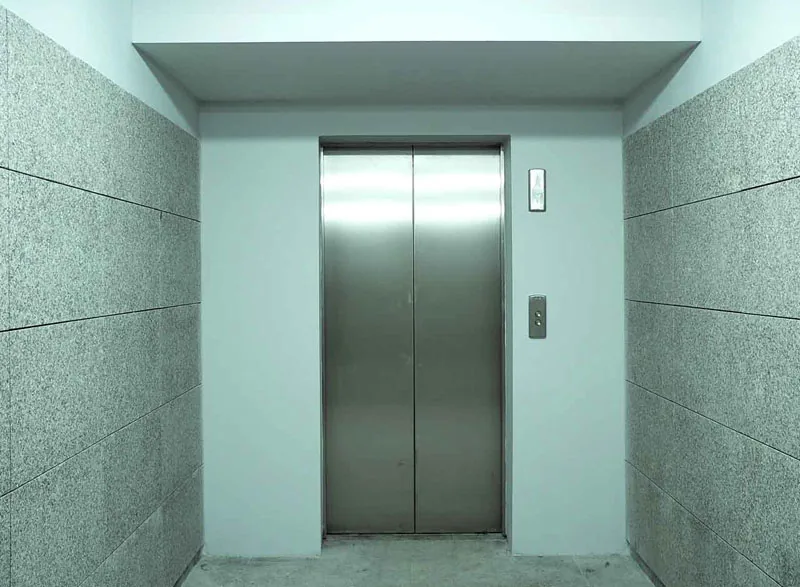
Essem Engineers manufactures and supplies traction lifts in India. We provide our clients with a wide range of Traction Lifts. Compared to hydraulic systems with similar statistics, traction lifts use substantially less power, yet they can operate at high speeds and successfully with a wide range of lift capabilities. These lifts operate quietly and with exceptional stopping precision, providing you with comfort during your journey.
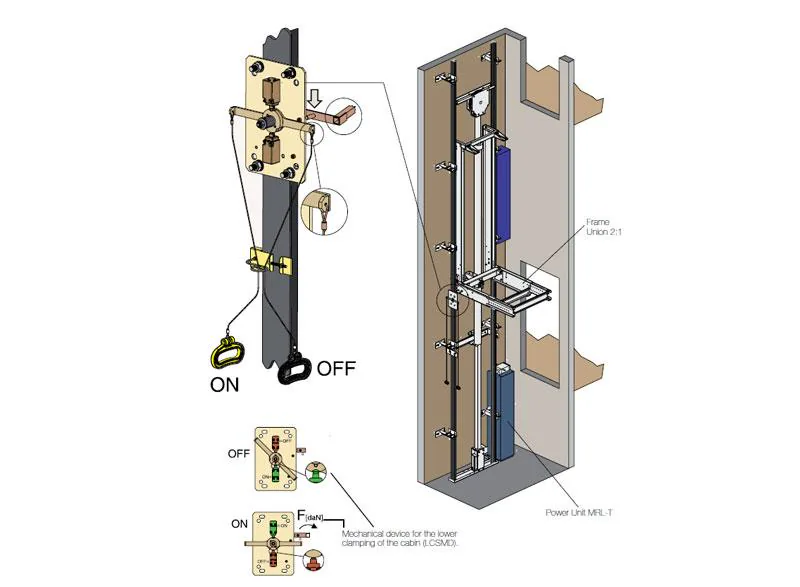
The entire lift system of the Essem Engineers Traction Drive lift is contained within the shaft of the lift. A counterbalance system improves the use of the smooth and silent driving unit by significantly lowering power consumption. Because there is no need for lubrication or oiling, these systems are also easy to maintain. Low energy consumption keeps long-term running costs down.
Our traction lift range has a capacity of carrying 4–10 people. We can, however customize it as per the client’s requirements. We use quality materials to manufacture these traction lifts.
Essem Engineers design traction lifts that function for smooth and efficient operation, as well as their ability to handle heavier loads and taller buildings. Our traction lifts utilize a system of ropes or belts attached to an electric motor. These ropes or belts are connected to the elevator car and pass over a series of pulleys or sheaves at the top of the elevator shaft. When the motor rotates, it pulls or releases the ropes, causing the elevator car to move up or down. These lifts are widely used in various settings, including residential, commercial, and industrial buildings.
Our lifts are constructed using premium components and superior-grade stainless steel. These key components include the elevator car, counterweight, traction system, controller, motor, and safety device. All the components work together and provide efficient vertical material transportation. Their features include sturdy construction, handling heavier loads and taller buildings, reliable operation, sophisticated cabin design with ergonomic features, and more.
At Essem Engineers, we conduct thorough assessments of entire manufacturing activity at every stage of production; these include raw materials testing, component inspection, prototype testing before full-scale production, performance testing to assess its speed, load-bearing capacity, smoothness of operation, and adherence to safety standards, environmental temperature extremes, humidity, and vibration, to withstand real-world operating environments, endurance testing, compliance testing to meet all relevant industry standards and regulatory requirements, and customer feedback integration to refine our manufacturing processes and enhance the quality of our products over time.
Essem Engineers have decades of industry experience that provides customized solutions tailored to individual needs. Moreover, we have a diverse range of products to suit various applications.
Specifications
- Speed
- up to 1.0 m/s
- Capacity range
- 380 – 2000 kg
Salient features
- Quick Transportation Floors
- Suitable for various building types
- Superior load-bearing capacity for heavy operational loads
- Enhanced safety features and compliance with regulations
- Customizable options to suit specific aesthetic preferences
- Professional installation and after-sales support
- Increased property value and accessibility
- Wide variety of finishes
More passenger & traction lifts
Traction Lifts: common questions
A hydraulic scissor lift raises a platform on crossed steel arms driven by one or more hydraulic cylinders. Oil pushed into the cylinder forces the arms towards vertical and the deck rises straight up, with no swing and no overhead structure. Lowering is done by metering that oil back out, so the descent stays controlled under load.
Start with the heaviest thing that will ever sit on the deck, then add whatever carries it: the pallet, the cage, the trolley, the operator. That total is the safe working load, and it should sit inside the rating with room to spare rather than right at the edge of it. Where the load sits matters as much as what it weighs, so tell us if it lands off-centre or rolls on from one end.
A pit lets the deck finish flush with the floor, so pallet trucks roll straight on and nothing has to be lifted over a lip. The trade is civil work and a commitment to that spot. Floor-mounted units need no excavation and can be relocated later, but you live with the collapsed height and usually want a ramp. Where flush loading is needed without a deep pit, a zero-level table is the middle path.
We do not publish prices, because a 200 kg two-wheeler platform and a 6000 kg showroom car lift are not the same conversation. Cost follows capacity, travel, platform size, control specification and whether the site needs civil work. Send us those five things and you get a real figure back instead of a range that means nothing.
Almost everything that leaves the works is built to order. Platform size, travel, capacity, control voltage, deck finish and guarding are specified per job, which is why the catalogue lists ranges rather than fixed models. If the machine you need is not on the site, that is normal. Describe the duty and we will size it.
Essem Engineers holds ISO 9001:2008, which certifies how we manufacture rather than stamping an individual machine. In practice that means documented material sourcing from certified vendors, and inspection at each stage of production instead of a single check at the end. Machines are tested under load before despatch.
Yes. We take work from concept through to commissioning, including the drawings, fabrication, installation and handover, and we support the unit afterwards for the rest of its working life. Several of the installations in our gallery were fitted into live showrooms and running plants, around the customer’s working day.
We have installed more than 375 plants across India and abroad, from three units in Delhi NCR: a head office in Keshav Puram and works at Maya Puri and Bahadurgarh. Customers include the Indian Air Force, Maruti Suzuki, Honda, Jaypee Group and Dass Hitachi.
Less than most people expect, which is much of why they last. The routine is oil level and condition, hoses and fittings checked for weeping, pins and bushes greased, and the scissor path kept clear so nothing gets trapped as the arms close. Anything beyond that is usually a symptom rather than a schedule, and worth a call.
That depends on the specification and on your site. A standard-size lift table moves faster than a multi-landing goods lift that needs a pit dug and a shaft framed. We will give you a date with the quotation rather than a stock answer, and it will account for the civil work if there is any.
A goods lift is built around a load and the people who load it, so the deck, the guarding and the landing gates are sized for pallets, trolleys and stock. A passenger lift is built around people, with the cabin, controls and safety systems that implies. We build both, and the wrong choice usually shows up as a deck that is the right capacity but the wrong shape.
Send us the load, travel and footprint. We’ll send back a drawing.
Most of what we build is made to order. Share your application and our engineers will come back with a configuration, a capacity and a price.