
Hydraulic Stacker Lift
Need this to a spec?
Send us the load, travel and footprint. We’ll come back with a configuration and a price.
Request a quoteHydraulic Stacker Lift
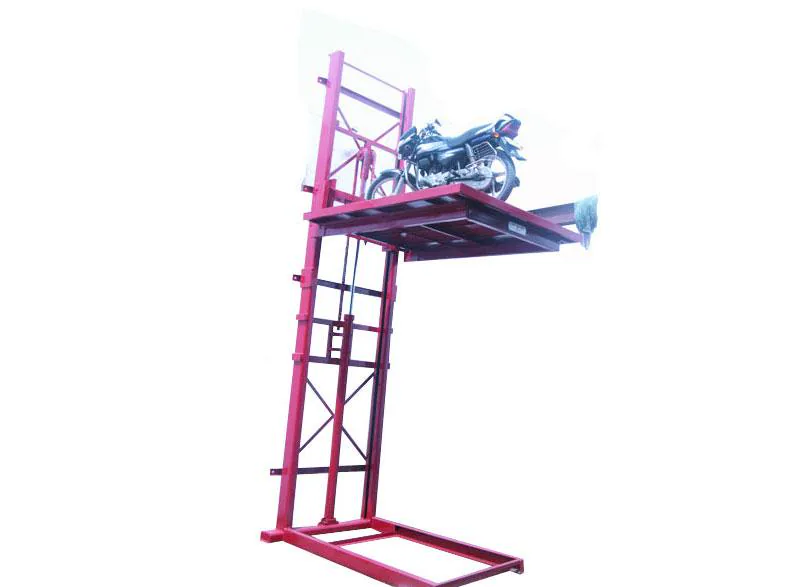
Essem Engineers is engaged in manufacturing and supplying an extensive variety of Hydraulic Stackers Lifts. This range is used across a range of material handling applications. Leveraging on vast industry experience, Essem engineers is able to offer its clients a range of Hydraulic Stacker lifts that is appropriate for various areas like cold stores, canning, dairy, and all areas where saline solutions and corrosive liquid are used. All parts of this hydraulic stacker lifts are fabricated using high quality materials, including fork frame, hydraulic pump, push rod, handle, bolt and pin.
Our hydraulic stacker lifts can perform various functions efficiently like lifting and transporting skid, baskets, bales, and loading-unloading of trucks, dies and mold handling and stocking shelves. These Hydraulic Stacker lifts are appropriate for moving in crowded or closed areas when power lifts are combined with a simple push to operate. Our hydraulic stacker lifts are engineered accurately for excellent durability and smooth operation. The range of our stacker lifts offered by Essem Engineers is famous in the field for its easy operation, long lasting durability and rugged construction.
Specifications
- Capacity
- 1000 kg
- Lift height
- 0 – 4000 mm
Salient features
- Fork length: As required
- Fork width: As required
Hydraulic Stacker Lift: common questions
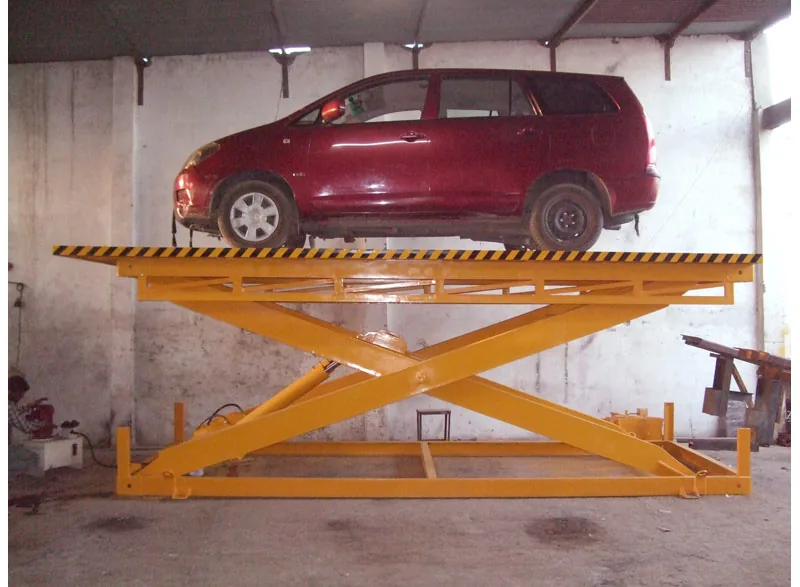
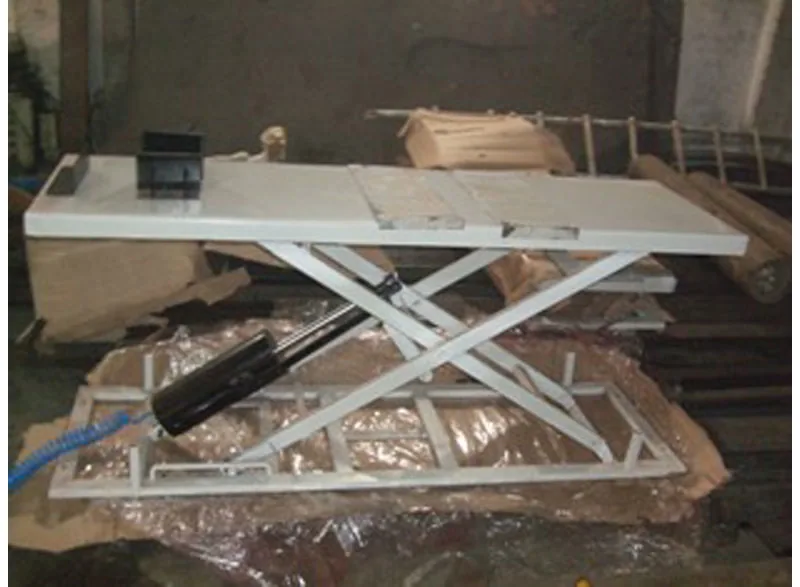
A hydraulic scissor lift raises a platform on crossed steel arms driven by one or more hydraulic cylinders. Oil pushed into the cylinder forces the arms towards vertical and the deck rises straight up, with no swing and no overhead structure. Lowering is done by metering that oil back out, so the descent stays controlled under load.
Start with the heaviest thing that will ever sit on the deck, then add whatever carries it: the pallet, the cage, the trolley, the operator. That total is the safe working load, and it should sit inside the rating with room to spare rather than right at the edge of it. Where the load sits matters as much as what it weighs, so tell us if it lands off-centre or rolls on from one end.
A pit lets the deck finish flush with the floor, so pallet trucks roll straight on and nothing has to be lifted over a lip. The trade is civil work and a commitment to that spot. Floor-mounted units need no excavation and can be relocated later, but you live with the collapsed height and usually want a ramp. Where flush loading is needed without a deep pit, a zero-level table is the middle path.
We do not publish prices, because a 200 kg two-wheeler platform and a 6000 kg showroom car lift are not the same conversation. Cost follows capacity, travel, platform size, control specification and whether the site needs civil work. Send us those five things and you get a real figure back instead of a range that means nothing.
Almost everything that leaves the works is built to order. Platform size, travel, capacity, control voltage, deck finish and guarding are specified per job, which is why the catalogue lists ranges rather than fixed models. If the machine you need is not on the site, that is normal. Describe the duty and we will size it.
Car lifts are supplied with a 220 / 440 / 24 V control system as standard, with the 24 V side handling the pendant and landing controls. Other machines are configured to the supply available on site, single or three phase. Some platforms are offered battery-powered or hand-pump operated where no supply is practical.
Essem Engineers holds ISO 9001:2008, which certifies how we manufacture rather than stamping an individual machine. In practice that means documented material sourcing from certified vendors, and inspection at each stage of production instead of a single check at the end. Machines are tested under load before despatch.
Yes. We take work from concept through to commissioning, including the drawings, fabrication, installation and handover, and we support the unit afterwards for the rest of its working life. Several of the installations in our gallery were fitted into live showrooms and running plants, around the customer’s working day.
We have installed more than 375 plants across India and abroad, from three units in Delhi NCR: a head office in Keshav Puram and works at Maya Puri and Bahadurgarh. Customers include the Indian Air Force, Maruti Suzuki, Honda, Jaypee Group and Dass Hitachi.
Less than most people expect, which is much of why they last. The routine is oil level and condition, hoses and fittings checked for weeping, pins and bushes greased, and the scissor path kept clear so nothing gets trapped as the arms close. Anything beyond that is usually a symptom rather than a schedule, and worth a call.
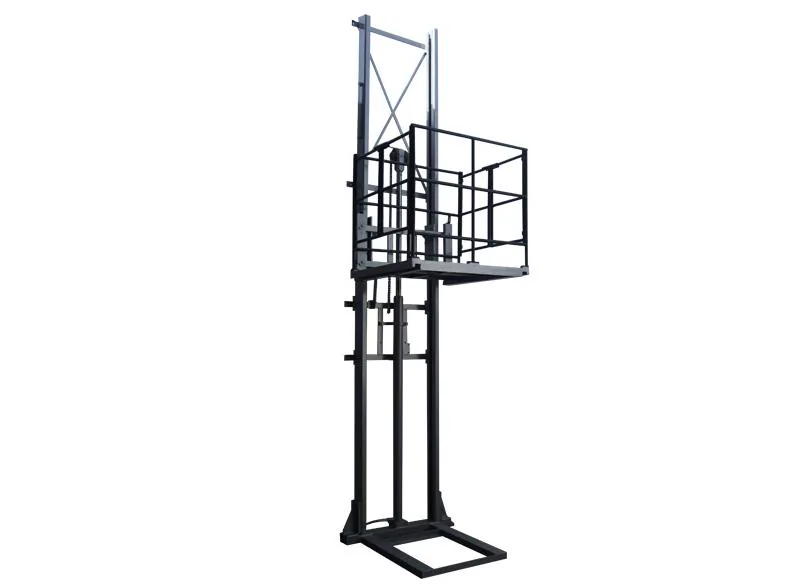
That depends on the specification and on your site. A standard-size lift table moves faster than a multi-landing goods lift that needs a pit dug and a shaft framed. We will give you a date with the quotation rather than a stock answer, and it will account for the civil work if there is any.
Send us the load, travel and footprint. We’ll send back a drawing.
Most of what we build is made to order. Share your application and our engineers will come back with a configuration, a capacity and a price.